Car Insurance in Washington DC
Updated June 22, 2026 · 5 min read
Washington DC minimum requirements at a glance
Washington DC requires 25/50/10 liability coverage and mandatory uninsured motorist coverage. DC applies contributory negligence, one of the strictest fault standards in the country.
State minimum coverage requirements
Under DC Code Section 31-2406, all Washington DC drivers must maintain the following minimum coverage:
- $25,000 bodily injury per person
- $50,000 bodily injury per accident
- $10,000 property damage per accident
Driving without insurance in Washington DC results in a fine and license suspension. DC requires continuous coverage for any registered vehicle. Reinstating your driving privileges requires proof of current insurance, payment of reinstatement fees, and resolution of any outstanding suspension. DC's Department of Motor Vehicles cross-references vehicle registrations with active insurance data to enforce the continuous coverage requirement.
Is Washington DC a no-fault state?
No. Washington DC is an at-fault state.
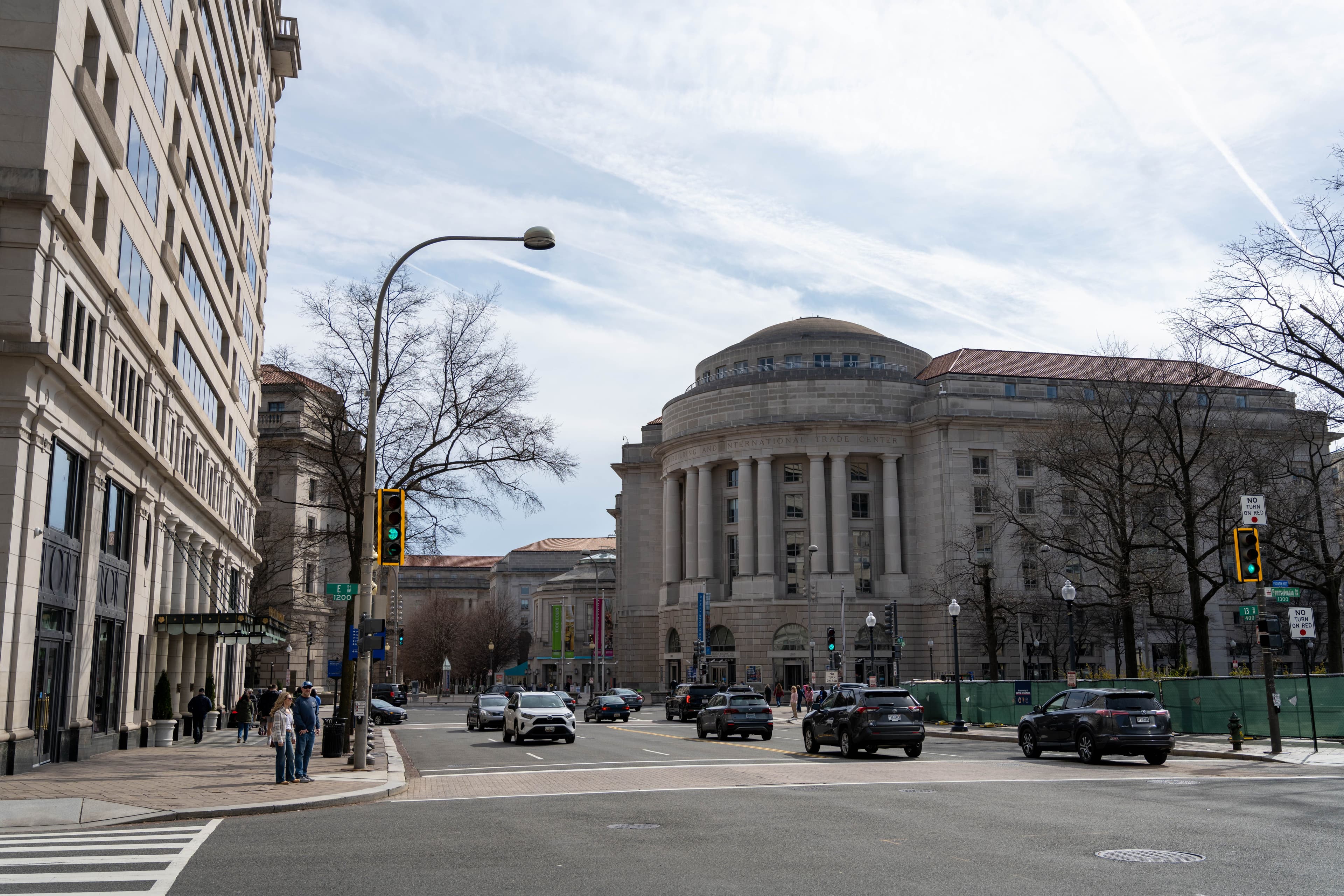
Washington DC is an at-fault jurisdiction that applies a contributory negligence rule, one of the strictest fault standards in the country used in only a handful of jurisdictions, Alabama, Maryland, Virginia, North Carolina, and Washington DC. Under contributory negligence, if you are found even one percent at fault for an accident, you are completely barred from recovering any compensation from the other party regardless of how much more at fault they were. There is no proportional reduction as there would be under comparative negligence; the bar is absolute. A finding of any contributory fault extinguishes your claim entirely. Washington DC's driving environment makes this rule particularly significant. DC has extremely dense traffic, heavy pedestrian crossings, a complex grid with traffic circles, significant bicycle traffic, and some of the busiest intersections in the country. In this environment, the circumstances of any accident are often contested, and establishing that you had zero contributing fault can be genuinely difficult. Defense attorneys in contributory negligence jurisdictions specifically look for any minor traffic infraction, speed variance, or driving choice that can be characterized as contributing to an accident, because a successful contributory negligence argument completely bars the plaintiff's recovery. This dynamic makes thorough documentation even more important in DC than in most places. Dashcam footage, witness accounts, traffic camera footage requests, and accurate police reports are all more valuable here than in a comparative fault state. Because the tort system can bar your recovery entirely even when the other driver was predominantly at fault, your own medical payments coverage and mandatory UM coverage serve as the most reliable financial protections available to DC drivers, since they pay regardless of how fault is allocated.
What the state minimum covers and does not cover
Washington DC's 25/50/10 liability minimum covers only injuries and property damage you cause to other people. It does not cover:
- Damage to your own vehicle from a collision
- Your own medical expenses after an accident
- Losses caused by an uninsured or underinsured driver
- Theft, weather events, or vandalism to your vehicle
Uninsured motorist coverage is mandatory
Washington DC requires all auto insurance policies to include uninsured motorist coverage at limits matching the policyholder's liability coverage. This mandatory UM requirement is especially significant in a contributory negligence jurisdiction where your own tort recovery may be completely barred if you had any share of fault. UM coverage pays your medical expenses and vehicle damage when an at-fault uninsured driver causes an accident regardless of the fault question for tort recovery. Because UM must match your liability limits, increasing your liability to 100/300 automatically raises your UM to the same level.
How credit affects your rate in Washington DC
Washington DC permits insurers to use a credit-based insurance score as one factor when pricing auto policies. The check is a soft inquiry and does not affect your credit report or credit score. Washington DC law requires insurers to notify you if credit information results in an adverse action on your policy, giving you the opportunity to review your credit report for inaccuracies. If your credit has improved since your last renewal, shopping new quotes across multiple carriers is worthwhile because carriers weight credit differently and improvements in your score can reduce your premium even without any change in your driving record.
Recommended coverage levels
Most advisors recommend carrying at least 100/300/100 liability in Washington DC. Because mandatory UM must match your liability limits, raising liability to 100/300 also automatically raises your UM coverage to the same level. Medical payments coverage provides an important backstop for your own injuries regardless of fault, which is especially valuable under DC's contributory negligence rule, where the tort system may bar your recovery entirely even when the other driver was primarily responsible. Washington DC's dense urban environment also makes vehicle theft and vandalism more common than in suburban or rural markets. Comprehensive coverage handles theft, vandalism, and weather-related damage including flooding from heavy storms and hail. Given that DC's northeast storm exposure can produce significant weather events, comprehensive coverage is a practical protection for vehicles parked on city streets. If your vehicle is financed or leased, collision and comprehensive are required by your lender. For vehicles you own outright, collision and comprehensive are worth carrying on any vehicle with remaining value, particularly given DC's elevated vehicle theft rates compared to suburban Virginia and Maryland. For most DC drivers, a complete policy of 100/300/100 liability, UM at matching limits, collision, comprehensive, and medical payments provides the broadest protection available and accounts for both the contributory negligence rule and the urban risk environment.
How insurers determine your rate in Washington DC
Washington DC insurers use your driving record, zip code, vehicle type, age, annual mileage, and credit-based insurance score to calculate your premium. Washington DC consistently produces some of the highest auto insurance premiums in the country due to extremely high traffic density, accident frequency, vehicle theft rates, and the elevated cost of medical care and vehicle repairs in the metro area. Premiums in DC proper are substantially higher than in suburban Maryland and Virginia. At-fault accidents and moving violations typically affect your rate for three to five years. Because each insurer weights these factors differently, comparing quotes from multiple carriers at renewal is the most reliable way to find the most competitive rate for your specific profile.
SR-22 requirements in Washington DC
An SR-22 in Washington DC is a certificate filed by your insurer with the Department of Motor Vehicles confirming you carry at least the state minimum liability coverage. You may be required to maintain an SR-22 after a DUI conviction, after driving without insurance, or after certain serious traffic violations. The requirement typically lasts three years from the triggering event, and your license remains suspended until the SR-22 is on file. If your policy lapses during the SR-22 period, your insurer must notify the Department of Motor Vehicles immediately, which reinstates your suspension. Not all insurers handle SR-22 filings, so drivers who need one should specifically look for carriers that serve the non-standard auto insurance market in Washington DC.
Compare Washington DC car insurance quotes
Enter your Washington DC zip code and compare personalized rates from top carriers in minutes. Free, no obligation, no spam calls.
Get a Free Washington DC Quote