
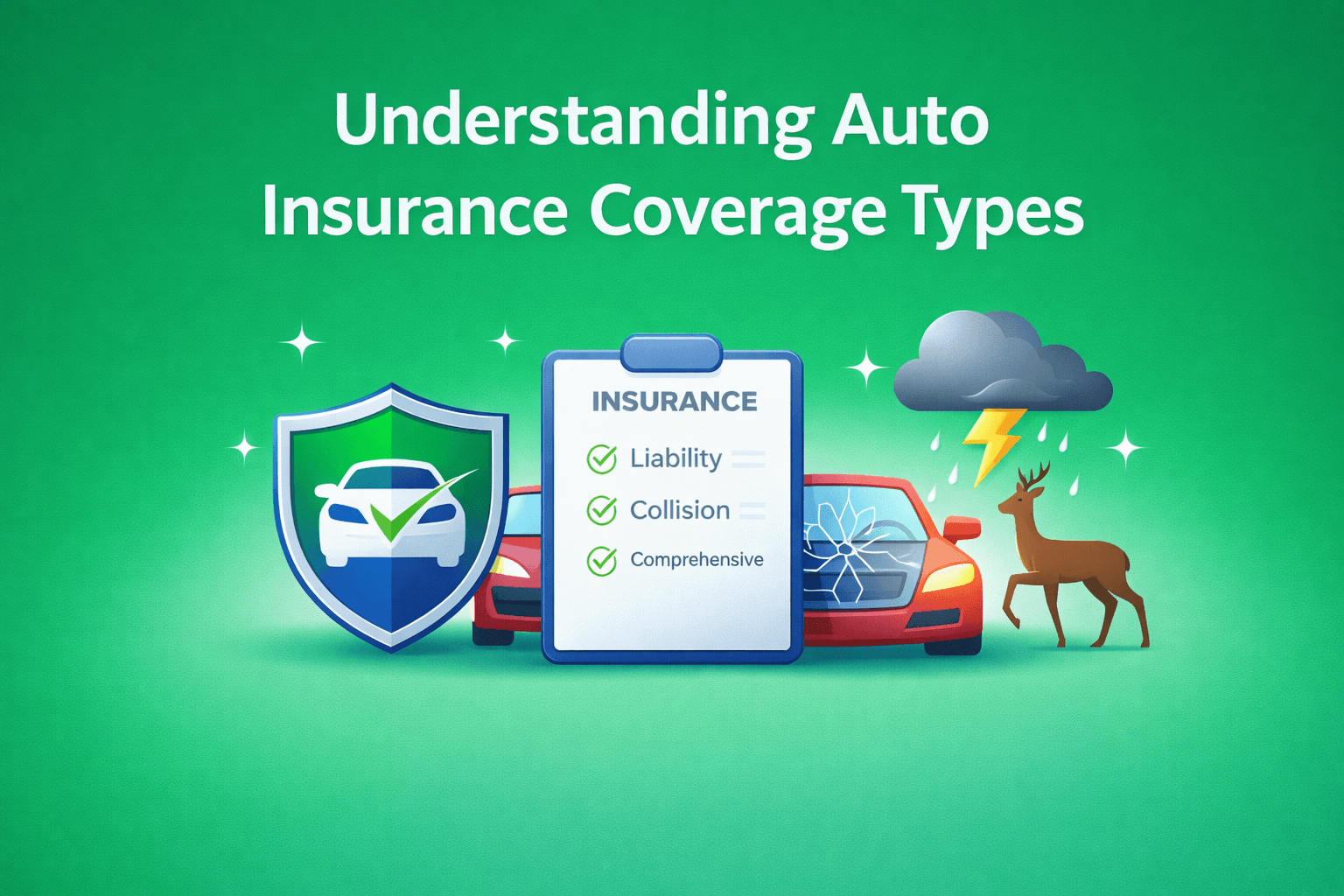
Understanding Auto Insurance Coverage Types: A Complete Guide
Understanding Auto Insurance Coverage Types: A Complete Guide
Navigating the world of auto insurance can be confusing, especially when you're trying to understand the different types of coverage available. This comprehensive guide will help you understand each coverage type so you can make informed decisions about your auto insurance policy.
Liability Coverage
Liability coverage is the foundation of most auto insurance policies and is required by law in almost every state. It protects you if you're at fault in an accident.
Bodily Injury Liability
This coverage pays for medical expenses, lost wages, and legal fees if you injure someone in an accident. It typically includes:
- Medical bills for injured parties
- Lost income due to injuries
- Pain and suffering damages
- Legal defense costs
Property Damage Liability
This covers damage you cause to someone else's property, including:
- Vehicle repairs
- Damage to buildings or structures
- Other property damage
Minimum Requirements: Each state sets minimum liability limits, but experts recommend carrying at least $100,000/$300,000/$50,000 coverage.
Collision Coverage
Collision coverage pays for damage to your vehicle when you collide with another vehicle or object, regardless of who's at fault. This coverage is especially important if you:
- Have a loan or lease on your vehicle
- Drive a newer or expensive car
- Can't afford to repair or replace your vehicle out of pocket
Comprehensive Coverage
Comprehensive coverage protects your vehicle from non-collision incidents, including:
- Theft
- Vandalism
- Natural disasters (hail, floods, earthquakes)
- Fire
- Falling objects
- Animal collisions
Like collision coverage, comprehensive is typically required if you have a loan or lease.
Personal Injury Protection (PIP)
PIP, also known as "no-fault" insurance, covers medical expenses and lost wages for you and your passengers, regardless of who's at fault. PIP is required in some states and optional in others.
Uninsured/Underinsured Motorist Coverage
This coverage protects you if you're involved in an accident with a driver who:
- Has no insurance
- Has insufficient insurance to cover damages
- Flees the scene (hit-and-run)
Medical Payments Coverage
Medical payments coverage helps pay for medical expenses for you and your passengers after an accident, regardless of fault. It's similar to PIP but typically has lower limits.
Additional Coverage Options
Rental Reimbursement
Covers the cost of a rental car while your vehicle is being repaired after a covered claim.
Roadside Assistance
Provides services like towing, battery jump-starts, flat tire changes, and lockout assistance.
Gap Insurance
Important for leased or financed vehicles, gap insurance covers the difference between what you owe and your car's actual cash value if it's totaled.
How Much Coverage Do You Need?
The right amount of coverage depends on several factors:
- State Requirements: Meet your state's minimum requirements
- Asset Protection: Carry enough liability to protect your assets
- Vehicle Value: Consider collision and comprehensive for newer vehicles
- Financial Situation: Ensure you can afford your deductible
Tips for Choosing Coverage
- Assess Your Risk: Consider your driving habits and local conditions
- Review Annually: Your coverage needs change over time
- Compare Quotes: Get quotes with different coverage levels
- Ask Questions: Don't hesitate to ask your agent for clarification
Conclusion
Understanding auto insurance coverage types is essential for protecting yourself and your assets. While it might seem overwhelming, taking the time to understand each coverage type will help you make informed decisions and ensure you have the protection you need.
Ready to find the right coverage at the best price? Compare quotes from top providers.